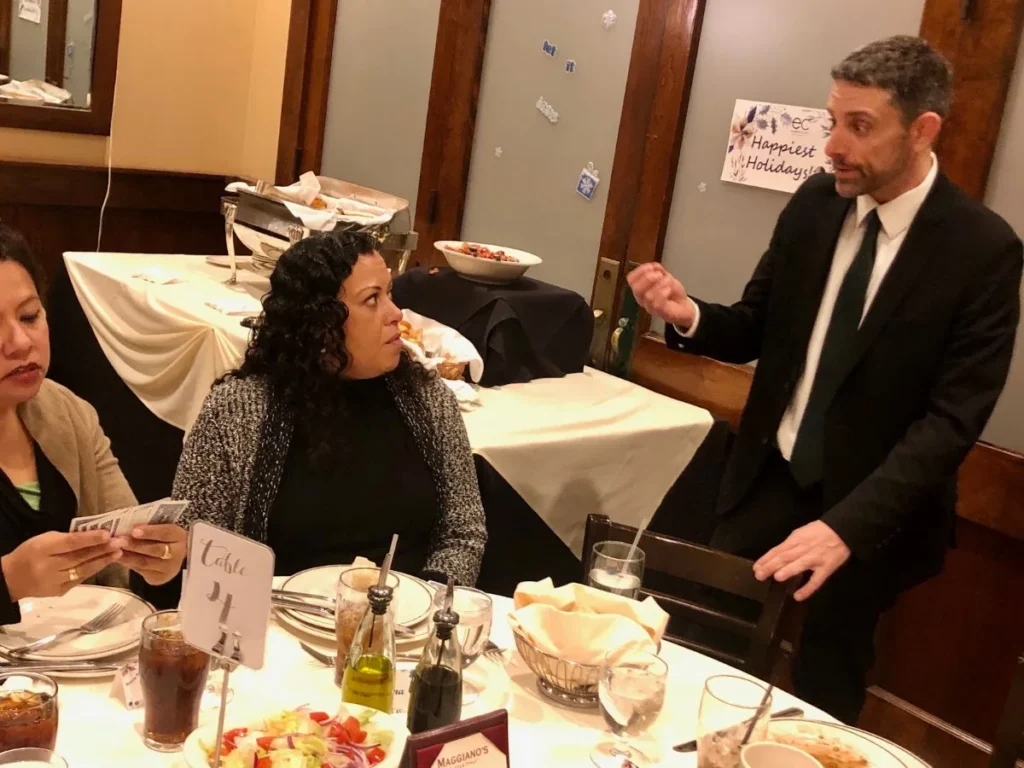
There is a moment at every good house party when the energy either lifts or leaks. The food has been eaten, the second round of drinks has been poured, and thirty people are standing in your kitchen having four separate conversations. That is the moment live entertainment earns its fee.
If you have started looking into hiring a magician or mentalist for an in-home private party, you have probably run into two very different words used in the same breath: strolling and show. They sound like small logistical details. They are not. Choosing between mix-and-mingle strolling magic and a seated stand-up show shapes how your whole evening flows, where your guests stand, when you serve dessert, and how much of the night you spend hosting instead of enjoying yourself.
This guide breaks down both formats honestly: what each one does well, what each one asks of your home, and how to pick the right one for the party you are actually throwing. By the end you will know which format fits, what to ask a performer before you book, and how to build a timeline that makes the entertainment feel effortless rather than forced.
In-Home Party Magic: What’s Inside
What Hiring a Magician for an In-Home Party Actually Involves
In-home entertainment is its own discipline. A ballroom gives a performer a stage, a sound system, lighting, and a hundred feet of separation from the front row. A living room gives them a coffee table, a lamp, and a guest standing close enough to see their fingernails. The material that works in one setting often collapses in the other.
That proximity is the whole appeal. When magic or mentalism happens inches away, in a room your guests know, with objects they can hold, there is no stage to hide behind and no distance to blame. Someone borrows a ring, watches it vanish, and finds it again somewhere it has no business being. Someone thinks of a private memory and hears it described back to them. In a room of twenty or thirty people, that lands harder than any large-venue spectacle.
What it also means is that format matters more than it would anywhere else. In a theater, the audience faces one direction and stays put. In your home, guests wander, refill drinks, step onto the patio, and drift toward whoever is telling the best story. A professional working private parties has to either move with that current or deliberately stop it. Those two answers are exactly what strolling magic and a stand-up show represent.
Strolling Magic and Mix-and-Mingle: How the Format Works
Strolling magic, also called walk-around, roving, or mix-and-mingle magic, means the performer moves through your party in small sets. They join a group of three to eight guests, perform a tight five-to-ten-minute sequence built for that circle, leave the group on a high note, and move to the next cluster. Over a ninety-minute booking, most groups get seen once and the more social guests catch two or three different pieces.
Nothing stops. No one is asked to sit down, put down a drink, or turn a chair around. The party keeps running exactly as it was, and small pockets of amazement keep popping up inside it. From across the room you hear a burst of laughter, then a genuine shout, and people start migrating toward the noise on their own.
Where Strolling Magic Shines
Strolling is the safer default for most in-home parties, and there are concrete reasons why. It handles a guest list that arrives over a long window, because there is no start time to miss. It handles an open floor plan with three or four natural gathering spots, because the performer simply visits each one. It handles the awkward early stretch of a party when only a third of your guests have shown up and the ones who have do not all know each other.
It is also the strongest icebreaker in live entertainment. Strangers who watched something impossible together three minutes ago have something to talk about. If your party mixes neighbors, college friends, and your spouse’s coworkers, strolling magic quietly does the introductions you were dreading.
What Strolling Magic Asks of Your Space and Schedule
The one thing strolling does need is enough guests. With eight people in a room, walk-around sets stop making sense because there is only one group to visit. Below roughly fifteen guests, a single seated performance is usually the better shape for the evening.
Timing and Pacing
Ninety minutes is the workhorse booking for a house party of twenty-five to fifty. Sixty minutes covers a smaller group comfortably. Two hours suits a long cocktail-style evening where guests trickle in across the first hour. The best placement is almost always the arrival-and-cocktails stretch, ending as dinner is served or as you move into toasts, cake, or whatever the centerpiece of your night happens to be.
The Stand-Up Show and Parlor Show: How the Format Works
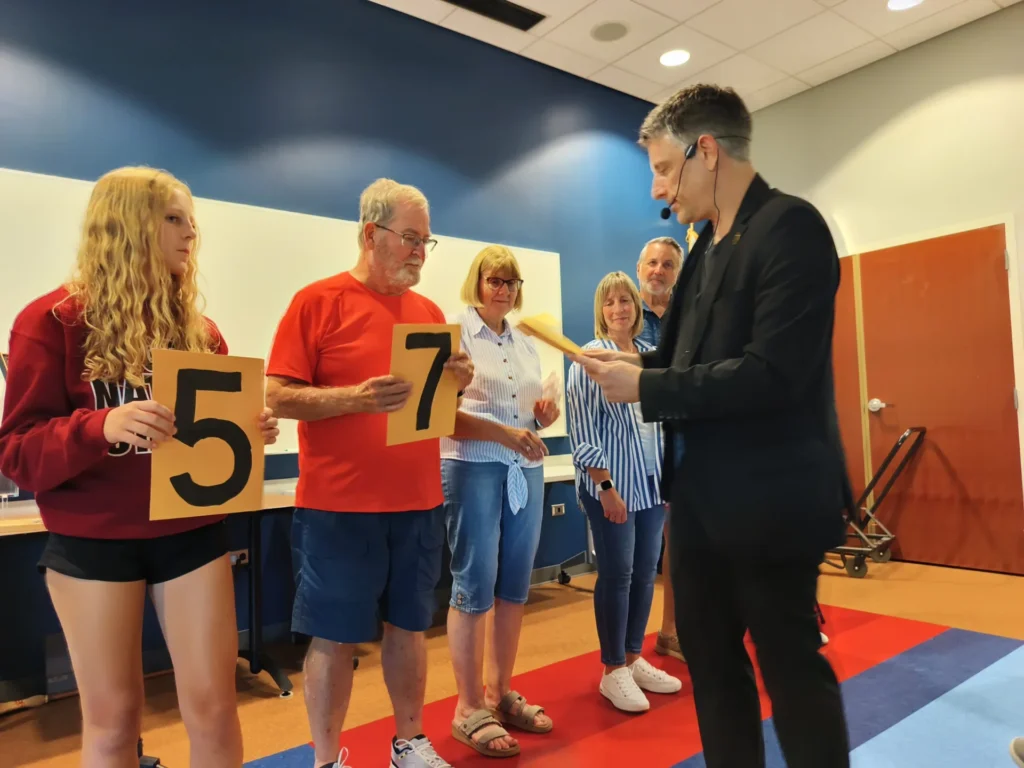
A stand-up show, often called a parlor show in a home setting, is a single performance with a beginning, a middle, and an ending, delivered to your whole guest list at once. Everybody gathers. The music goes down. For roughly thirty-five to fifty minutes, one story unfolds in front of the entire room, with volunteers pulled from your guests and routines built to read clearly for forty or fifty pairs of eyes at the same time.
This is where mentalism tends to do its best work. Mind reading, predictions written before the party started, a guest’s private thought revealed out loud: those pieces need a shared audience to detonate properly. When the whole room gasps together, the memory gets stamped in far deeper than it would if only six people had seen it.
Where a Stand-Up Show Shines
Book a show when your party has a reason to have a centerpiece. Milestone birthdays, anniversaries, retirements, engagement celebrations, holiday gatherings, and graduations all carry a built-in sense of occasion, and a show gives that occasion a shape. There is a before, an event, and an after that people talk about on the drive home.
What a Stand-Up Show Asks of Your Space and Schedule
More than strolling, and this is where hosts get surprised. A show needs a performing area of roughly eight feet by six feet with the audience in front of it rather than surrounding it. It needs sightlines, which in practice means moving some furniture and arranging seating in a loose arc. Guests in the back need to see a standing performer from the waist up, so a room with a long narrow shape or a load-bearing column in the wrong place gets difficult.
Timing and Pacing
Slot the show after food and before dessert, or immediately after dinner while everyone is still seated and content. Late enough that the room has warmed up, early enough that nobody has hit the tired-and-tipsy wall. Roughly forty-five minutes is the sweet spot for a home audience: long enough to build genuinely, short enough that nobody’s back starts hurting in a dining chair.
Strolling Magic vs. Stand-Up Show: Side-by-Side Comparison
| Consideration | Strolling / Mix-and-Mingle Magic | Stand-Up / Parlor Show |
|---|---|---|
| Ideal guest count | 15 to 100+ | 15 to 60 with clear sightlines |
| Typical length | 60 to 120 minutes of roving sets | One 35 to 50 minute performance |
| Space required | Any room guests can stand in | Roughly 8 ft x 6 ft plus seating in an arc |
| Does the party pause? | No, it runs continuously | Yes, the whole room gathers |
| Best moment to schedule | Arrival and cocktail hour | After dinner, before dessert |
| Handles late arrivals | Effortlessly | Poorly |
| Icebreaking power | Excellent | Moderate |
| Shared big moment | Smaller, repeated moments | One large collective payoff |
| Host effort required | Almost none | An announcement and a furniture shuffle |
| Best fit for mentalism | Good | Outstanding |
Five Questions That Decide the Format for You
1. How Many Guests Are Coming?
Under fifteen, book a show, or a single seated set of close-up magic performed for everyone at once. There simply are not enough separate groups for roving to make sense. Between fifteen and thirty, either format works, and the decision comes down to the other four questions. Above thirty, strolling starts pulling ahead, because seating and sightlines for forty-plus people in a private home get genuinely hard. Above sixty, strolling is usually the only realistic option unless you have a great room built for it.
2. Does Your Party Have a Natural Centerpiece?
A fiftieth birthday, a retirement, an anniversary, an engagement: these events want a moment. Guests are already primed for a speech or a toast, so a show slides naturally into that slot and elevates it. A casual summer get-together, a holiday open house, or a neighborhood party has no such moment, and manufacturing one can feel forced. Strolling magic fits those evenings better because it enhances the party you planned instead of interrupting it.
3. What Is the Room Actually Like?
Walk your main space and be honest. Can twenty-five people see one spot without craning? Is there a wall the performer can work against so nobody ends up behind them? Would you be willing to move a coffee table and two armchairs? If the answers are yes, a show is on the table. If your home is a beautiful open-plan maze of islands, half-walls, and conversation pits, strolling will serve you far better.
4. Are Guests Arriving All at Once or Over an Hour?
Stated arrival times are aspirational. If you expect guests to filter in across a sixty-to-ninety-minute window, strolling absorbs that beautifully. Every arrival walks into a party that is already alive, and the performer folds newcomers into the next set. A show, by contrast, forces you into an unpleasant choice: start on time and leave people out, or hold and let the room go flat.
5. What Do You Want Guests Saying Tomorrow?
This is the real question. If you want them saying the party was fantastic and they met great people and something wild happened by the bar, book strolling. If you want them saying you have to hear what happened, and then retelling one specific impossible thing in detail, book the show. Both are wins. They are just different wins.
The Hybrid: Strolling First, Then a Short Seated Set
Here is what experienced hosts book once they have done this a few times. Start with forty-five to sixty minutes of strolling magic during arrivals and cocktails. Let it do the icebreaking, cover the late arrivals, and build a low hum of anticipation as people compare notes about what they just saw. Then, after dinner, gather everyone for a twenty-five to thirty-five minute seated set that pays the whole evening off with a shared climax.
The hybrid works because the two formats fix each other’s weaknesses. Strolling has no big finish; the seated set supplies one. A show has no warm-up and demands cooperation from a cold room; the strolling hour delivers an audience that is already sold and already gathered around the performer without being asked twice.
Does Choosing a Magician or a Mentalist Change the Answer?
Somewhat, yes. Sleight-of-hand magic with cards, coins, rings, and borrowed objects is purpose-built for close quarters, which makes it a natural fit for strolling. Mentalism, which deals in thoughts, choices, memories, and predictions, gains enormous power from a shared audience, which makes it a natural fit for a seated show.
What to Ask Before You Book
- Which format do you recommend for my guest count and my space? A good answer includes follow-up questions about your floor plan, not an instant upsell.
- How much room do you need, and do you need me to move furniture? You want this settled weeks out, not while guests are arriving.
- How long are you on site versus performing? Setup, briefing, and packing time are normal and should be stated clearly.
- Is the material appropriate for the ages and mix of my guest list? Confirm this if children, grandparents, or work colleagues will be in the room.
- Do you carry liability insurance and provide a written agreement? Professionals say yes without hesitating.
You can find more answers on our frequently asked questions page, which covers pricing structure, travel, and scheduling in more detail.
Common Mistakes Hosts Make
Booking a show for a party that never gathers. The most frequent misstep. A host imagines a theatrical moment, but the party is a fluid open house where nobody is going to sit down. The performance fights the room and everyone feels it.
Scheduling entertainment too late. Magic at eleven o’clock plays to a tired, over-served, half-departed audience. Put the entertainment in the strongest part of your evening, not the leftovers.
Under-booking the time. Thirty minutes of strolling for forty guests means most of them see nothing. Match the length to the headcount honestly, or you will pay for entertainment that half your party missed.
Two Sample Timelines for a Party of Thirty
Option A: Strolling Magic, Open-House Style
Guests begin arriving at seven. The performer starts at seven-fifteen and works the room in small sets while drinks and appetizers circulate. By eight o’clock the noise level has climbed and there is a small crowd near the kitchen watching a borrowed wedding ring appear inside a sealed envelope. At eight-forty-five the performer finishes their last set and slips out. Dinner is served at nine to a room full of people who are already energized and, more importantly, already talking to each other.
Option B: Stand-Up Show, Dinner Party Style
Cocktails from six-thirty to seven-thirty. Dinner served at seven-thirty. Plates cleared by eight-forty-five while the performer quietly sets up in the living room. At nine you make a short announcement, guests carry their glasses over and settle into a loose arc, and a forty-five-minute show runs to a genuine collective gasp. Dessert and coffee at nine-forty-five, and nobody leaves early because everyone wants to talk about what they just watched.
A Quick Note on Budget and Value
Format affects price, though not always the way people assume. Strolling bookings are usually priced by duration, so a ninety-minute set costs more than sixty. A stand-up show is typically priced as a single performance regardless of the fact that it is shorter, because it requires scripting, rehearsal, and a tighter structure. Hybrid programs cost the most because they involve more total performance time.

Frequently Asked Questions About In-Home Party Magicians
Is strolling magic or a stand-up show better for a house party?
For most house parties with fifteen to sixty guests and a fluid, mingling atmosphere, strolling magic is the better fit because it never interrupts the party and handles late arrivals easily. Choose a stand-up show when your party has a clear centerpiece such as a milestone birthday, when guests will be seated, and when your room offers good sightlines for everyone at once.
How far in advance should I book a magician for a private party?
Six to eight weeks is comfortable for most dates. For December, or for a Saturday during peak wedding and holiday season, aim for three to six months. Short-notice bookings are sometimes possible, but your choice of performer narrows quickly.
How much space does a magician need in a home?
Strolling magic needs no dedicated space at all, only decent light and a room guests can stand in. A stand-up show generally needs a performing area around eight feet wide by six feet deep, with seating arranged in front rather than around it.
Can one performer do both strolling magic and a show at the same party?
Yes, and it is a popular request. A typical hybrid runs forty-five to sixty minutes of strolling during cocktails followed by a shorter seated set after dinner. It requires more total time and a higher fee, but it delivers both the mingling benefit and the shared climactic moment.
Do I need a stage, microphone, or special lighting?
Almost never in a private home. Close-up work needs ordinary room light and nothing else. A parlor show in a very large great room occasionally benefits from a small speaker, which the performer will normally supply and discuss with you in advance.
Ready to Bring Something Unforgettable Into Your Living Room?
Whether your evening calls for strolling magic that keeps the room buzzing, a stand-up mentalism show that stops it cold, or a hybrid that does both, the right format turns a nice party into the one people bring up for years.
I perform close-up magic and mentalism for private parties, milestone birthdays, dinner parties, and celebrations throughout Chicago and the western and southwest suburbs. Tell me your guest count, your date, and a little about your space, and I will recommend the format that actually fits your evening. Learn more about private party entertainment and adult birthday party options, or get in touch to check your date.