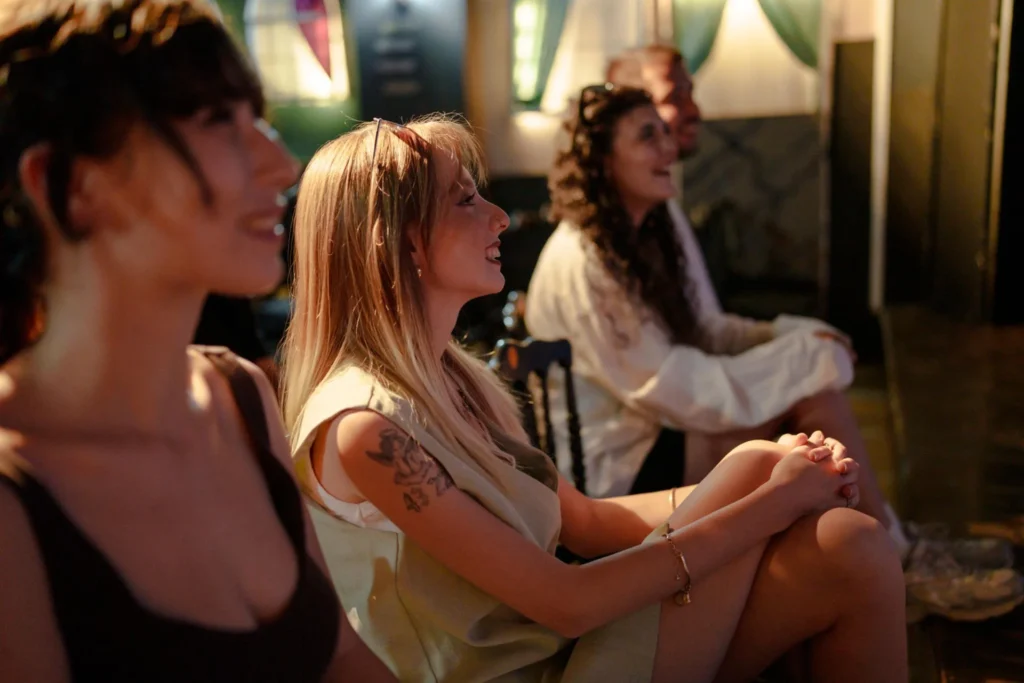
If you’re planning a wedding in Orland Park, Tinley Park, or New Lenox, you’ve probably already made the big decisions. The venue is booked. The DJ is deposited. Your photographer has the timeline. And somewhere in the middle of that timeline sits a sixty-minute block labeled “cocktail hour” that nobody has really planned at all.
That hour is the single biggest missed opportunity in southwest suburban weddings. It’s also the easiest one to fix.
More couples across Orland Park, Tinley Park, New Lenox, Homer Glen, Mokena, and Frankfort are booking a mentalist for cocktail hour — not as a novelty, but as the thing that turns a waiting period into the part of the night guests bring up for years afterward.
Cocktail Hour Entertainment Guide: What’s Inside
The Hour Nobody Plans
Here’s what actually happens during cocktail hour at most weddings around here.
You and your wedding party are off with the photographer, chasing golden hour on the golf course or the terrace. Your 150 guests are in a different room entirely. They’ve got a drink. They’ve found the two people they already know. Your college roommate is talking to your college roommate. Your aunt is talking to your other aunt. Somebody’s checking the score.
It’s not bad. It’s just flat. And it’s flat for a full hour, right before dinner — which means the energy your ceremony built up quietly leaks out of the room before the reception even starts.
Southwest suburb weddings make this more pronounced, not less, because of how our guest lists are built. These are big family weddings. Two extended families who’ve mostly never met, three generations deep, plus work friends, plus the neighbors your parents have had since 1994. Everyone is polite. Nobody is mixing. The room stays in its little clusters until the first dance forces the issue.
Why Cocktail Hour Is the Right Slot for Close-Up Magic and Mentalism
Cocktail hour is the best possible window for strolling mentalism, and it comes down to four practical things.
Guests are standing and mobile. Nobody is trapped at a table with a plated entrée in front of them. People can gather, watch, react, and drift — which is exactly the rhythm close-up work is built around.
There’s no stage and no setup. I don’t need a riser, a sound system, a lighting change, or a spot on your DJ’s timeline. I don’t compete with your band. I move through the room, and the room keeps doing what it was doing.
It gives strangers something to talk about. This is the underrated part. When six people watch a stranger’s thought get named out loud, they turn to each other afterward and say did you see that. Your uncle and your fiancé’s college roommate now have a conversation. That carries into dinner.
It has zero risk to your timeline. Photos run long. They always run long. Cocktail hour absorbs the delay instead of exposing it, because your guests aren’t standing around waiting — they’re occupied.
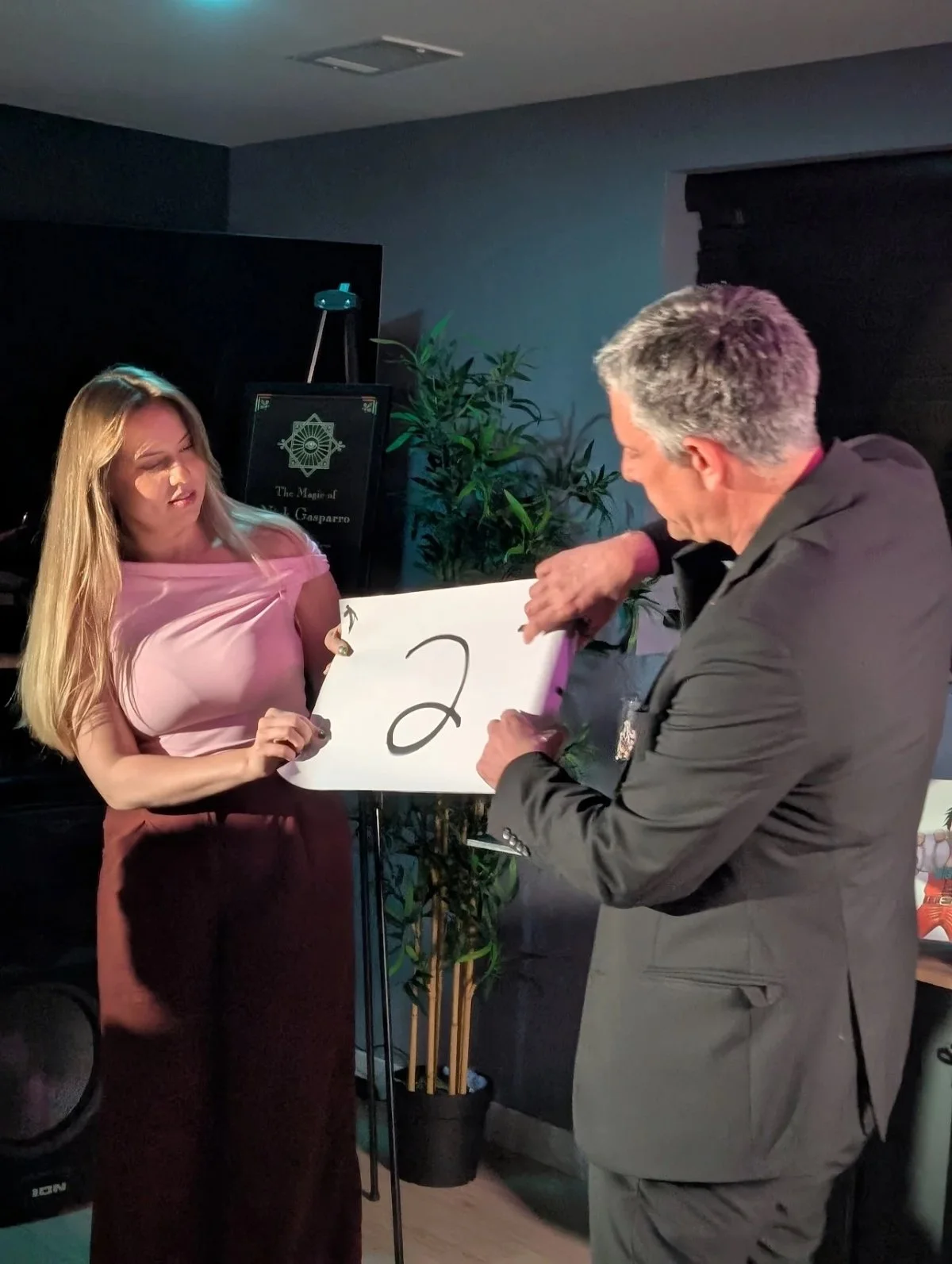
How Strolling Mentalism Actually Works in Southwest Suburb Rooms
The venues around here fall into a few recognizable shapes, and close-up mentalism fits all of them differently.
Country clubs — Crystal Tree Golf and Country Club and Silver Lake Country Club in Orland Park, Ruffled Feathers and Cog Hill in Lemont. These rooms usually give you a bar area plus a terrace or patio, and guests split between the two. Strolling work is ideal here precisely because I go where the people are instead of asking the people to come to me. If half your guests are outside on the terrace, I’m outside on the terrace.
Banquet halls — Orland Chateau and Georgios in Orland Park, DiNolfo’s in Homer Glen, Tuscany Falls in Mokena, Southern Charm in Frankfort. Larger cocktail spaces with high ceilings and real acoustic challenge. Close-up mentalism works in these rooms where a stand-up act would struggle, because the “stage” is a group of eight people standing in a circle, and the sound doesn’t have to travel any farther than that.
Event venues and hotels — The Odyssey and Elements by The Odyssey, the Tinley Park Convention Center. Big, flexible, often hosting a cocktail hour in a pre-function space. Same principle: I work the room in pockets, and the room never has to stop.
If you’re a New Lenox couple, you already know the wrinkle — most New Lenox weddings aren’t held in New Lenox. You’re likely at a venue in Mokena, Frankfort, Joliet, or Tinley Park, with a guest list that’s driving in from three directions (the same dynamic that shapes adult parties across Tinley Park, Orland Park, Lemont and Frankfort). That mix of arrival times makes cocktail hour uneven, with early guests waiting on late ones. Strolling entertainment handles an uneven room better than anything else on the menu, because it doesn’t have a start time that people can miss.
Outdoor cocktail hours work too, with one caveat: wind and direct sun are real. Shade, a covered terrace, or a patio with some structure to it makes a big difference. If your cocktail hour is fully outdoors in July, it’s worth a conversation about placement.
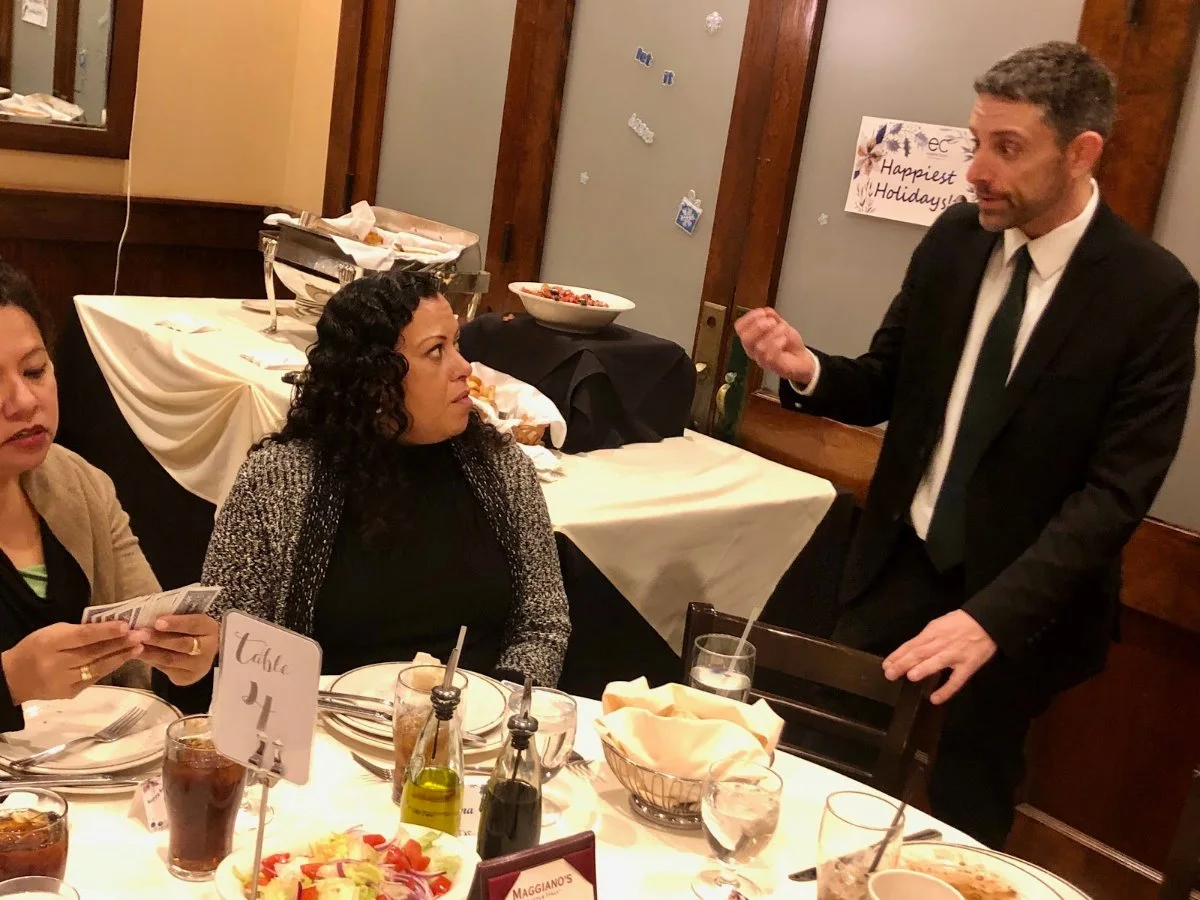
Mentalism vs. the Usual Cocktail Hour Options
Most couples are choosing between four things for this hour. Here’s the honest comparison.
Just music. Free, easy, and does nothing. Background music makes the room feel less empty; it doesn’t make the room feel like anything. If your budget is tight, this is a completely fine choice — just know it’s a floor, not a feature.
A photo booth. Fun, and you get props and a scrapbook out of it. But it creates a line, it lives in a corner, and it mostly serves the guests who were already going to have a good time. The quiet table of relatives is not getting up to put on a feather boa.
A caricature artist. Genuinely charming, and guests leave with a keepsake. Same structural issue as the booth, though — it’s a queue at a fixed point, serving one or two guests at a time. Over a 60-minute cocktail hour, that’s maybe 20 people out of 150.
Strolling mentalism. Comes to the guests instead of waiting for them. Serves a group of six to ten at a time rather than one. Requires no tech, no power, no floor plan change, and no line. And it reaches the people who would never volunteer for anything — because they’re not volunteering, they’re just standing there when it happens next to them.
The thing I’d point out specifically for southwest suburb weddings: our guest lists skew multigenerational. You’ve got a 9-year-old flower girl and an 87-year-old grandmother at the same reception. Mentalism is one of the few forms of entertainment that genuinely lands for both. It’s clean, it’s conversational, and the reaction it produces — that startled laugh — is the same at every age.
What a 45–90 Minute Cocktail Hour Set Looks Like
No mystery to it. Here’s the shape.
I arrive well ahead of your guests, check in with your coordinator or banquet manager, and get a read on the room — where the bar is, where people will naturally pool, whether the terrace is in play.
When guests start arriving, I begin working small groups. Six to ten people at a time, three to five minutes each, then I move. Over an hour I’ll typically reach most of the room. Nobody is singled out, nobody is dragged to the front, and anyone who’d rather just watch gets to just watch.
The material is mentalism rather than card tricks — thoughts named out loud, choices predicted before they’re made, information revealed that I have no business knowing. Your guests aren’t watching sleight of hand and trying to catch the move. They’re standing there trying to work out how any of it was possible, which is a much better place for them to be.
For most weddings, 60 to 90 minutes covers cocktail hour comfortably. Some couples extend into the first part of dinner, working tables while courses are served. That’s a good option if your cocktail hour is short or your guest count is high.
Then I’m gone before the toasts. Your reception is your reception.
When Southwest Suburb Couples Should Book
Entertainment beyond the DJ is usually the last thing couples think about, which means it’s usually booked late — and for the popular dates around here, late doesn’t work.
A rough guide for the southwest suburbs:
- September and October dates — book 9 to 12 months out. Fall is the single most competitive stretch in Chicagoland, and Saturdays go first.
- May and June dates — 8 to 10 months out.
- Holiday-season and New Year’s Eve weddings — 12 months, sometimes more.
- Friday, Sunday, and winter dates — you have more room, often 4 to 6 months.
If you’re inside that window, it’s still worth asking. Dates open up, and I’d rather tell you yes or no in an afternoon than have you assume it was too late.
Planning a DuPage County wedding instead? See these wedding cocktail hour entertainment ideas for DuPage County couples.
Frequently Asked Questions
How much space does a mentalist need for cocktail hour?
None, functionally. No stage, no sound system, no power. I work standing in whatever space your guests are already occupying. If there’s a bar area and a place to set a drink down, that’s enough.
Does it work outdoors?
Yes, with attention to conditions. Shade or a covered terrace is ideal. Direct midday sun and strong wind are the two things that make outdoor work harder, so if your cocktail hour is fully exposed, we’ll talk through placement beforehand.
Is it appropriate for older relatives and kids?
Yes to both — and this is the most common thing couples tell me afterward. The material is clean, there’s no embarrassment or forced participation, and it’s the rare wedding entertainment that a grandmother and a fourth-grader react to identically.
How is a mentalist different from a wedding magician?
A magician shows you something impossible with objects. A mentalist appears to work with your thoughts — naming a word you only thought of, predicting a choice before you make it. There’s overlap, and I do both — more on how mentalism works here — but mentalism tends to land harder with adult wedding crowds because it feels personal rather than performed.
Can you work during dinner instead of cocktail hour?
Yes. Table-to-table work during dinner service is a good fit for weddings with a short cocktail hour or a large guest count. Some couples do both.
Do you travel to New Lenox, Frankfort, and Mokena?
Yes — the southwest suburbs are a regular part of my calendar, along with the western suburbs. There’s no additional travel charge within Chicagoland.
Check Your Date
If you’re getting married in Orland Park, Tinley Park, New Lenox, or anywhere across the southwest suburbs and that cocktail hour block is still sitting empty on your timeline, it’s worth a short conversation.
I respond to availability requests within 24 hours, and I’ll tell you straight if I don’t think it’s the right fit for your room.
Check availability for your wedding date →
Or call 847-773-5306.