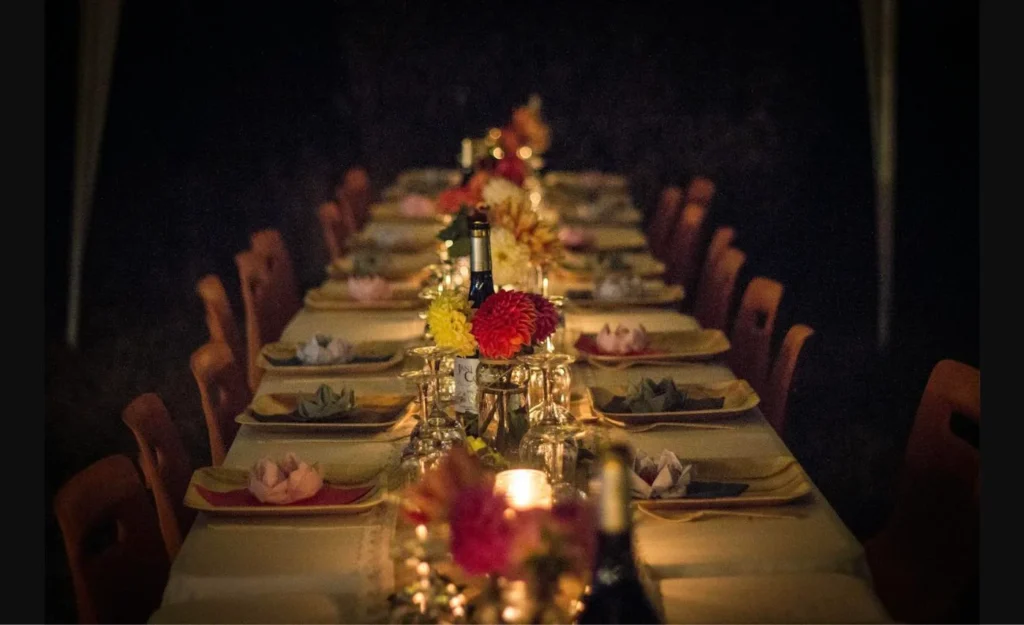
Fall sneaks up on the Chicago suburbs every single year. One week it is patio season, and the next, every venue, caterer, and entertainer in Naperville and Oak Brook is booked three weekends deep. If you are hosting a corporate event, wedding, or private party this fall, the biggest risk to your night is not the budget or the guest list. It is waiting too long to start.
Fall Event Planning Guide: What’s Inside
Why Fall Fills Up Faster Than Any Other Season
Fall is the busiest stretch of the event calendar in the western suburbs, and it is not close. Companies are wrapping up Q3 and planning client appreciation nights before year-end budgets reset. Couples who got engaged over the holidays or in early spring are hosting engagement parties and rehearsal dinners before winter arrives. Families are scheduling milestone birthdays, retirement send-offs, and reunions while the weather still cooperates. Nonprofits are running fall galas and fundraisers ahead of the December giving season. All of that demand lands in a tight eight-to-ten week window between September and mid-November, which means venues, caterers, and entertainers throughout Naperville, Oak Brook, Hinsdale, and the surrounding suburbs get locked in well before the leaves actually change.
The result is a strange planning paradox. Fall feels far away in July, so it is easy to put off decisions. But by the time it starts feeling “close,” most of the best dates and vendors are already gone.
The Ideal Planning Window
For most fall events, the sweet spot to start booking is late summer, roughly July through early August. That gives you first pick of weekend dates, enough lead time to coordinate with a venue and caterer, and room to actually enjoy the planning process instead of chasing availability.
If your event falls on a particularly popular weekend, a corporate holiday kickoff, a Halloween-adjacent party, or a fall wedding date, push that timeline even earlier. Those dates are usually the first to disappear from calendars. As a general rule of thumb, a good target is roughly two to four months out. If your fall event is scheduled for late September, you want your date, venue, and entertainment locked by late July. If it lands in late October or November, you have a little more runway, but not as much as you would think, since many hosts are planning for that same stretch at the same time.
Waiting until September to start planning does not mean your event will not happen. It usually means it will happen with your second-choice date, a smaller pool of available vendors, and less flexibility on timing during the evening itself.
What to Lock In First
Not every decision needs to happen at once, but a few pieces genuinely benefit from an early start.
Your date and venue are the two hardest things to change later, and venues in Naperville, Oak Brook, and Hinsdale tend to release their fall calendars early in the summer. Once a Saturday is gone, it is gone, and everything else on your planning list gets built around that one decision.
Your entertainment tends to book on the same timeline as your venue, for a simple reason: a performer can only be in one place on a given night. Whether you are booking live music, catering, or interactive magic and mentalism, those vendors are getting the same calls from other hosts planning the same season. Reaching out early is not about being overly cautious. It is about making sure the option is still available when you are ready to commit.

Your headcount range is the third piece worth nailing down early. You do not need a final number in July, but having a rough range helps every vendor, including your entertainer, plan a set that actually fits your space and crowd.
Corporate Events Have Their Own Clock
If you are planning a company event, fall usually means one of a few things: a client appreciation night, an employee recognition event, a company picnic before the weather turns, or an early kickoff to the holiday season. Corporate calendars fill from the top down. The earlier your event lands on someone’s calendar, whether that is a client’s or an employee’s, the easier it is to get real commitment from attendees rather than a string of last-minute regrets and no-shows.
Booking entertainment in July or August for a September or October event also gives you time to actually tailor the experience. A corporate event benefits enormously from entertainment that fits the room, whether that is a roaming mentalist working a cocktail hour before a keynote, or a stand-up moment built around your team and your industry. That kind of customization takes conversation and lead time, not a rushed booking two weeks out. If your fall event doubles as a thank-you to your staff, it is also worth looking at dedicated employee appreciation programs built specifically around recognition and morale rather than a generic party format.
Weddings and Rehearsal Dinners Follow the Same Rule
Fall remains one of the most popular seasons for western suburb weddings, thanks to the weather, the scenery, and the natural excuse to bring warm lighting and rich color palettes into a reception. If your wedding, rehearsal dinner, or engagement party falls between September and November, the vendors you want most, from photographers to florists to entertainers, are typically the first ones booked, often six months to a year in advance for the venue itself, and three to four months out for entertainment.
Couples weighing their reception entertainment options often start by comparing formats. If you are trying to decide whether a mentalist or a magician is the better fit for your wedding night, it helps to understand the difference before you are down to the wire on booking. A cocktail-hour set is a popular choice because it fills the natural gap between ceremony and reception without competing with toasts, dinner, or the first dance, but that only works if it is booked early enough to build into the timeline rather than bolted on as an afterthought.
Private Parties and Milestone Celebrations
Fall weekends also cluster heavily with private milestone events. Fortieth, fiftieth, and sixtieth birthdays, retirement parties, and anniversary celebrations all seem to gravitate toward September and October, in part because the weather is still pleasant enough for outdoor or patio elements but cool enough to justify moving the party indoors without anyone feeling like they missed summer.
For a deeper look at how live private party entertainment fits into a home celebration, from timing to format to how it scales with guest count, it is worth reading through the specifics before you settle on a date. And if you are still deciding between styles of entertainment for an intimate gathering, this comparison of magician versus mentalist for in-home parties breaks down which format tends to land best depending on your guest list and the mood you are going for.
Fundraisers and Community Events
Fall is also prime season for galas, charity auctions, and community fundraisers, many of which are scheduled deliberately ahead of the December giving season when donor attention is highest. These events often have their own layer of complexity, since they usually involve a program, a keynote or auction segment, and entertainment that needs to work around both without overwhelming the evening. Booking entertainment early for a fundraiser gives you room to align the performance with the program flow, rather than squeezing it in wherever there happens to be a gap.
Fall Around the Western Suburbs
Every town in the western suburbs has its own fall rhythm. Naperville’s Riverwalk and downtown corridor draw a steady stream of engagement sessions, rehearsal dinners, and private parties once the weather cools, which means venues there tend to book out early. Oak Brook, with its concentration of corporate campuses and event spaces, sees a heavier corporate calendar in September and October as companies plan client events before year-end.
Hinsdale’s residential character makes it a hub for private, in-home milestone celebrations, while Downers Grove, Elmhurst, and Wheaton all see their own mix of community fundraisers and family gatherings clustered into the same eight-week stretch. Wherever your event falls, the underlying pattern is the same: everyone in the region is trying to book the same handful of fall weekends, so earlier is always better than later.
A Simple Way to Think About Timing
If your fall event is roughly two to four months away, now is the right time to start confirming your date, venue, and entertainment. If it is closer than that, it is still very possible to put together something memorable, but your options narrow with every week that passes, especially for Saturday dates in late September and October.
A rough cheat sheet: for events in September, aim to have your date and key vendors locked by late June or July. For October events, July through early August is your window. For November events, you have a bit more breathing room, but August is still the safer target, especially if your date overlaps with a holiday weekend.
How to Vet a Fall Entertainer Before You Book
Fall’s crowded calendar makes it tempting to book the first available name you find, but a few minutes of vetting up front saves a lot of stress later. Start by asking how the performer’s format actually works for your event type. A roaming, interactive style suited to a cocktail hour is a very different experience than a seated stage show, and the wrong fit can leave a corporate mixer feeling stiff or a milestone birthday feeling oddly formal.
Ask about experience with events similar to yours, not just total years performing. A magician who regularly works western suburb corporate events will naturally understand how to read a room of coworkers differently than a room of wedding guests or extended family. Recent, relevant reviews from Naperville, Oak Brook, or Hinsdale hosts tend to say more than a generic star rating.
It is also worth asking directly what happens if your date or headcount shifts. Fall weather and schedules can move things around, and a professional entertainer should have a clear, simple answer about flexibility rather than a rigid policy that penalizes you for normal planning changes. Finally, confirm logistics early: how much space is needed, whether a sound system is required, and how the performance fits around your existing schedule of speeches, dinner, or a program. These are small questions, but they are much easier to sort out in July than the week of your event.
Budgeting for Fall Entertainment Without Surprises
Pricing for event entertainment tends to track demand, and fall is peak demand in the western suburbs. Booking early does not just protect your date, it also tends to protect your rate, since performers are less likely to need to charge a premium for squeezing in a last-minute date around an already full calendar. If you want a clearer sense of what to budget before you start reaching out to vendors, this pricing guide for hiring a magician or mentalist in Naperville and Oak Brook breaks down typical costs by event size and format, so you can plan your fall budget with real numbers instead of guesswork.
A good rule of thumb is to treat entertainment as one of the two or three line items you settle early, alongside venue and catering, rather than the piece you fill in last with whatever budget happens to be left. Hosts who wait until the end of their planning process to think about entertainment often end up choosing based purely on availability rather than fit, which is exactly the scenario early planning is meant to avoid.
You do not need every detail finalized to start planning. What matters is getting the pieces that book up fastest, your venue and your entertainment, locked in while your options are still wide open. If you are weighing whether your fall event needs magic, mentalism, or something else entirely, reaching out early costs you nothing and gives you the most room to build the night you actually want.
Frequently Asked Questions
Is it really too early to book in July for something in October? Not at all. It is close to ideal. July and August give you first choice of dates and the most flexibility to customize the entertainment around your event rather than settling for whatever is left.
What if I am already past the ideal window? You still have options. Availability gets tighter, but reaching out as soon as possible is always better than waiting further, and many hosts find that the right entertainer can still make an October or November date work with a bit of flexibility on timing.
Does the type of event change how early I should book? Somewhat. Corporate events and weddings tend to book earliest because they usually involve coordinating with a venue, caterer, and multiple stakeholders. Private parties have a bit more flexibility, but the entertainment itself still books on the same calendar as everyone else’s fall plans.
The Real Cost of Waiting
It is worth being honest about what actually happens when planning starts late. It rarely means an event falls apart entirely. Instead, it usually shows up as a series of small compromises that add up: a Friday instead of a Saturday, a venue that is available but not the one you actually wanted, or an entertainer who can only offer a shorter set because they already have another commitment earlier that evening. None of these compromises are disastrous on their own, but together they change the feel of a night you were hoping would be memorable for the right reasons.
The flip side is just as true. Hosts who start in July or early August routinely report that the planning process itself felt easier, not just the outcome. There is time to compare a couple of options, ask questions, and make a decision you feel good about rather than one you made because it was the only thing left on the calendar.
How far in advance do venues in the western suburbs typically book for fall? Popular venues in Naperville, Oak Brook, and Hinsdale often take fall reservations six to twelve months ahead for weddings, and two to four months ahead for corporate and private events. The exact window varies by venue, but the pattern is consistent: fall dates go first.
Can entertainment be added closer to the date if the rest of the event is already planned? Yes, in many cases. Entertainment is one of the more flexible pieces to slot in later compared to a venue or catering, but the closer you get to a fall Saturday, the more limited the options become, especially for a specific time slot like a cocktail hour.
Should I still plan ahead if my fall gathering is a smaller, casual get-together rather than a big formal event? Yes. Smaller private parties have more scheduling flexibility than weddings or corporate events, but the entertainers, caterers, and venues you might want are still working off the same fall calendar as everyone else. A little lead time simply gives you more of the good dates and formats to choose from, even for a casual night with friends.